—Understanding Stage Lighting Fixture Materials: Why It Matters for Performance and Durability
Ao escolher stage lighting fixtures, most people focus on brightness, beam angle, lighting effects, or control functions. However, one of the most important factors is often overlooked: the material used in the fixture housing.
In reality, the material directly affects:
- Heat dissipation performance
- Fixture weight and transportation cost
- Durability and impact resistance
- Waterproof and outdoor reliability
At LIRO-LITE, different product categories such as IP-rated stage lighting, moving head lights, and effect lights use different structural materials based on application environments.
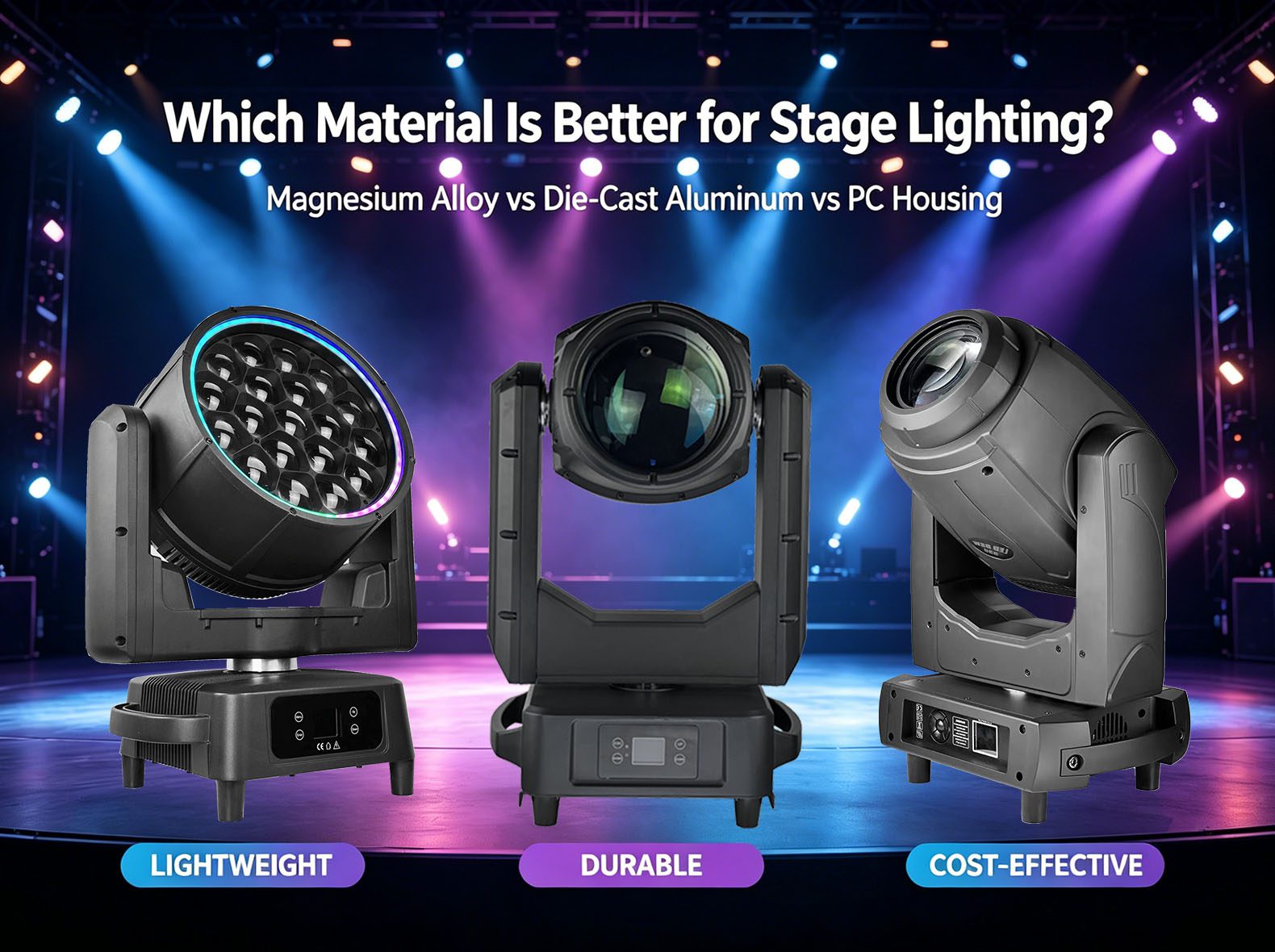
In this article, we will explain three of the most commonly used materials in modern stage lighting fixtures:
- Magnesium Alloy
- Die-Cast Aluminum
- High-Temperature Resistant PC Plastic
Why Material Selection Is Critical in Modern Stage Lighting Fixtures
Modern LED stage lighting fixtures face two major challenges:
1. High Heat Output
High-power LED chips generate significant heat during operation. Without proper thermal management, performance and lifespan will be reduced.
2. Complex Operating Environments
Stage lighting is often used in:
- Outdoor concerts
- Touring productions
- Stadium events
- Wet or high-humidity environments
Therefore, lighting fixture materials must ensure:
- Efficient heat dissipation
- Structural strength
- Waterproof sealing compatibility
- Lightweight design for transportation
This is why professional manufacturers like LIRO-LITE widely use metal-based housing structures for IP65/IP66-rated fixtures.
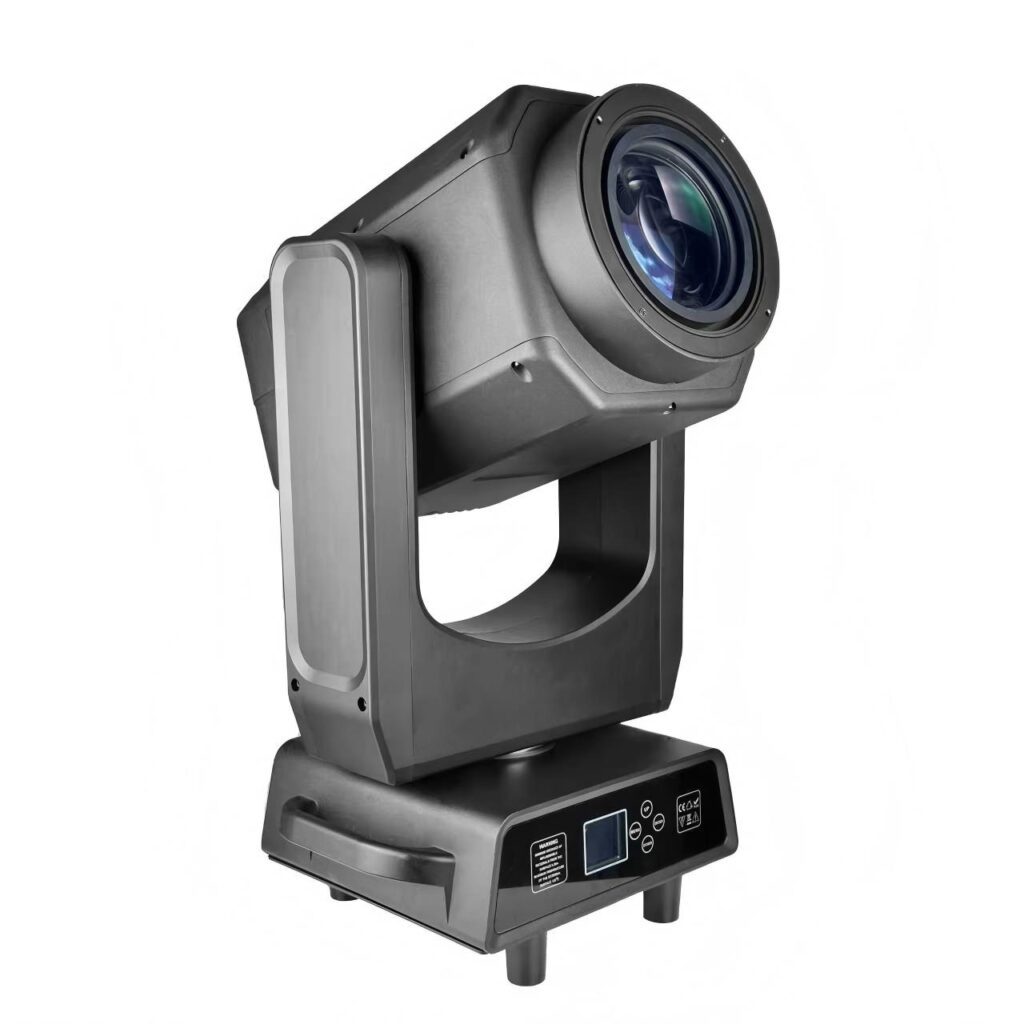
Magnesium Alloy: The Lightweight Champion for High-End Stage Lighting Fixtures
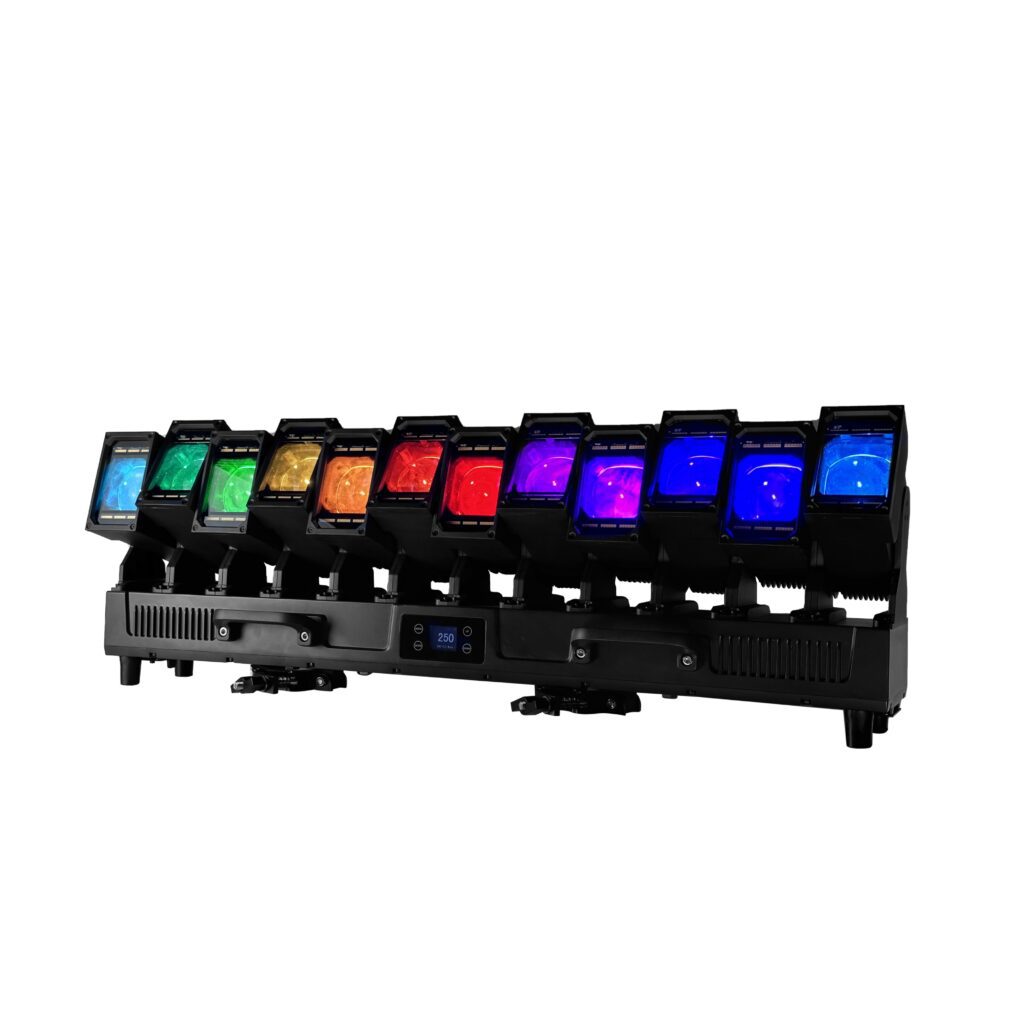
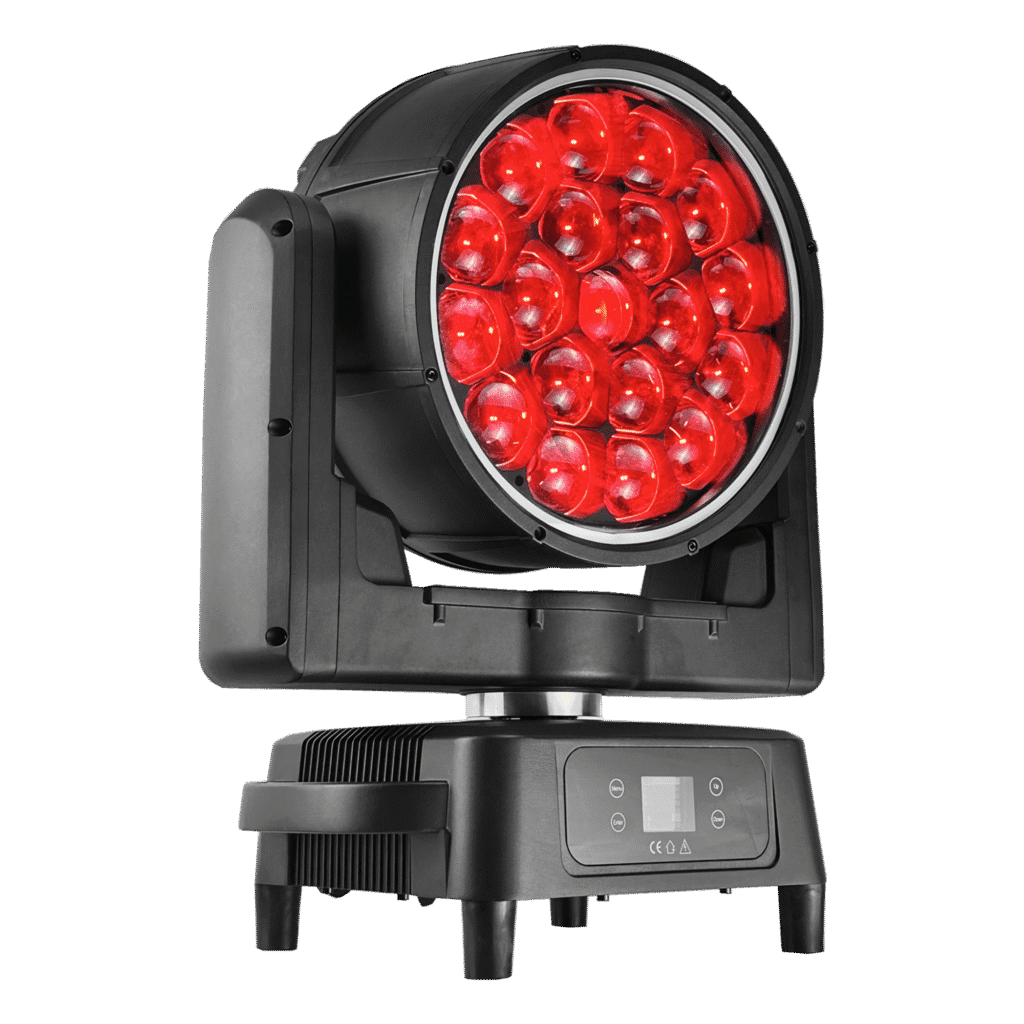
Magnesium alloy is widely used in high-end IP-rated moving head lights due to its excellent strength-to-weight ratio.
Representative Products:
- IP MDS 1260
https://www.instagram.com/lirolighting/reel/DVr0X93kxOF/ - IP B-EYE 1940
https://www.instagram.com/lirolighting/reel/DOIpd7lkg4_/ - IP LASER Beam 300 Infinite
https://www.instagram.com/lirolighting/reel/DYmTWrUzUT7/
Advantages:
- Extremely lightweight structure
- Excellent heat dissipation performance
- High mechanical strength and durability
- Reduced transportation and installation costs
Disadvantages:
- Higher production cost
- More complex manufacturing process
Best Applications:
- Touring productions
- Large-scale outdoor concerts
- High-end stage lighting projects
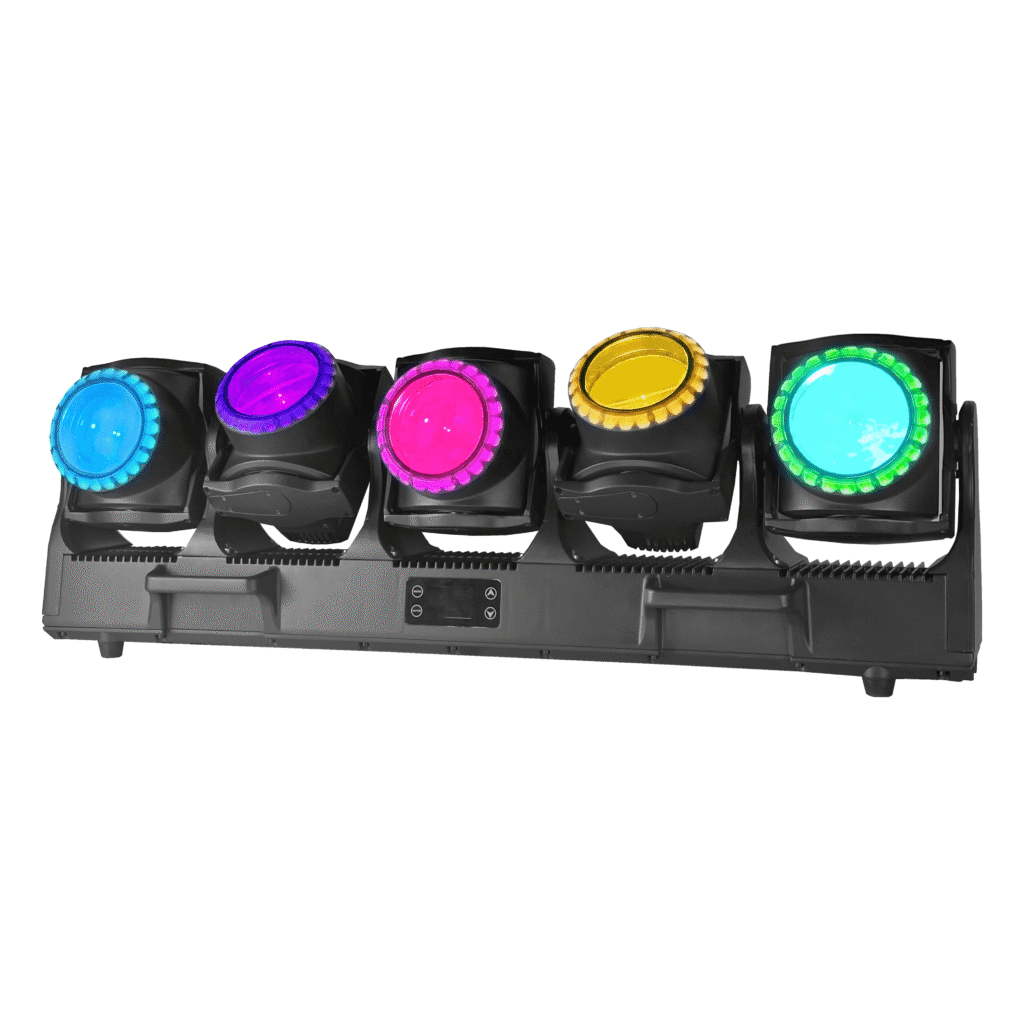
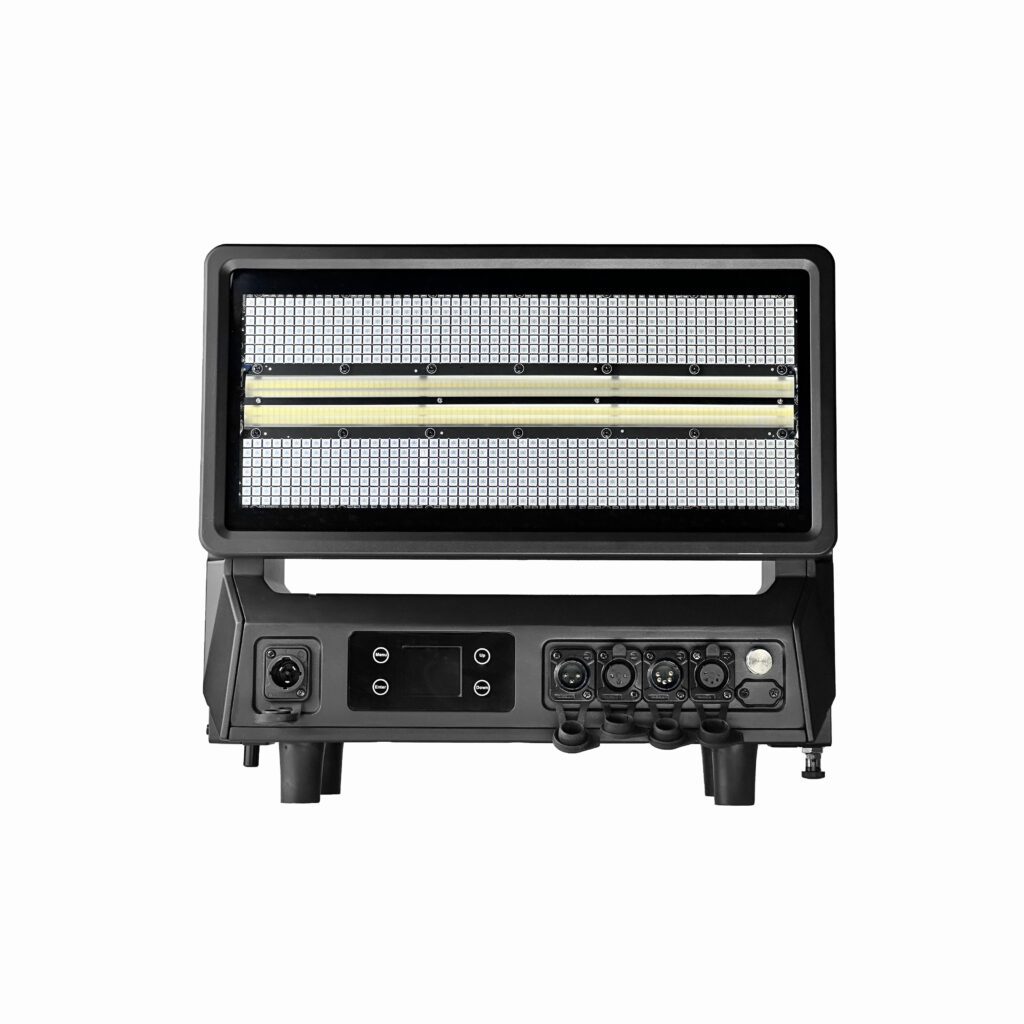
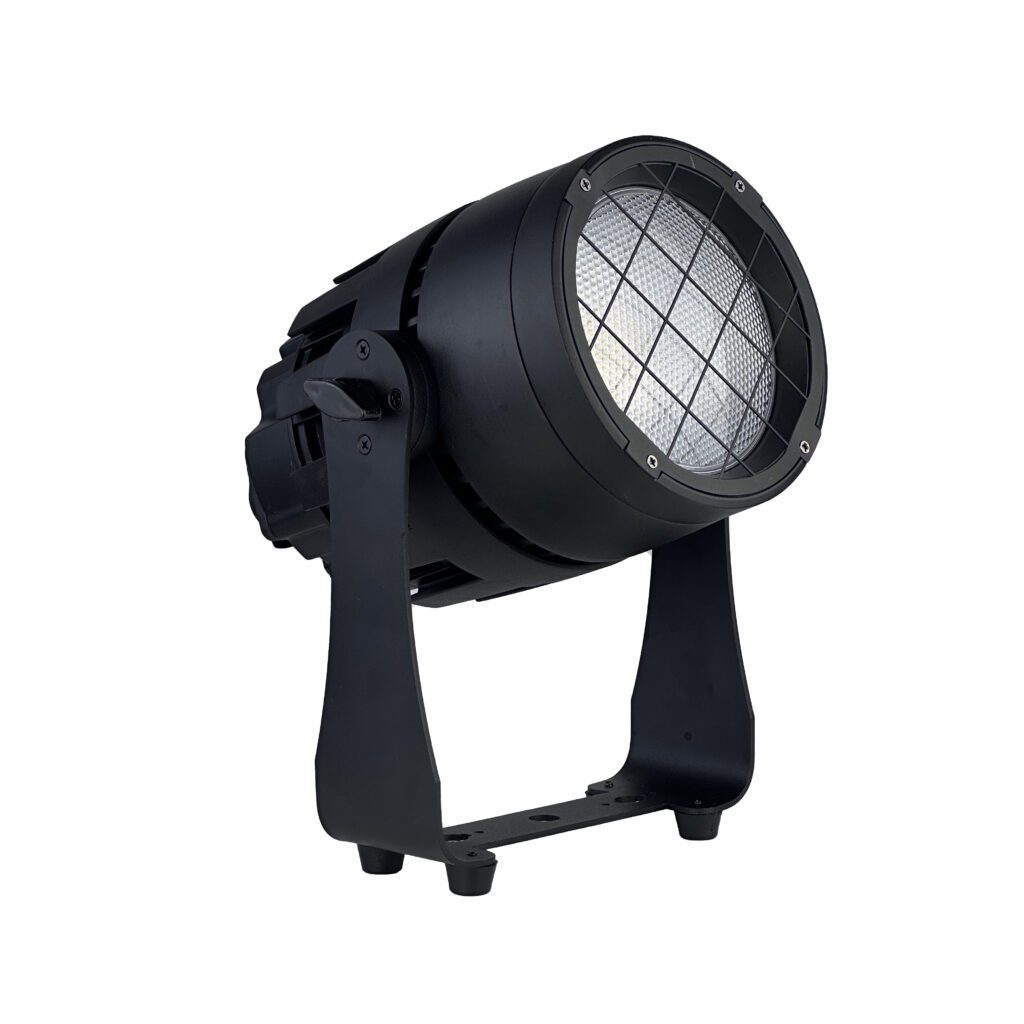
Die-Cast Aluminum: The Structural Backbone of Professional Stage Lighting
Die-cast aluminum is the most widely used material in professional outdoor stage lighting fixtures due to its strength and thermal performance.
Representative Products:
- IP Tornado TB5
https://www.instagram.com/lirolighting/reel/DUVKEeYiKnO/ - IP Strike M
https://www.instagram.com/reel/DXoiDNEk-fH/ - IP SOLI BLINDER
https://www.instagram.com/lirolighting/reel/DRbizTNE2Ix/
Advantages:
- One-piece molded structure for high strength
- Excellent heat dissipation performance
- Strong waterproof sealing compatibility
- High reliability for outdoor use
Disadvantages:
- Heavier than magnesium alloy
- Higher initial mold cost
Best Applications:
- Outdoor stage events
- Engineering lighting installations
- High-power lighting systems
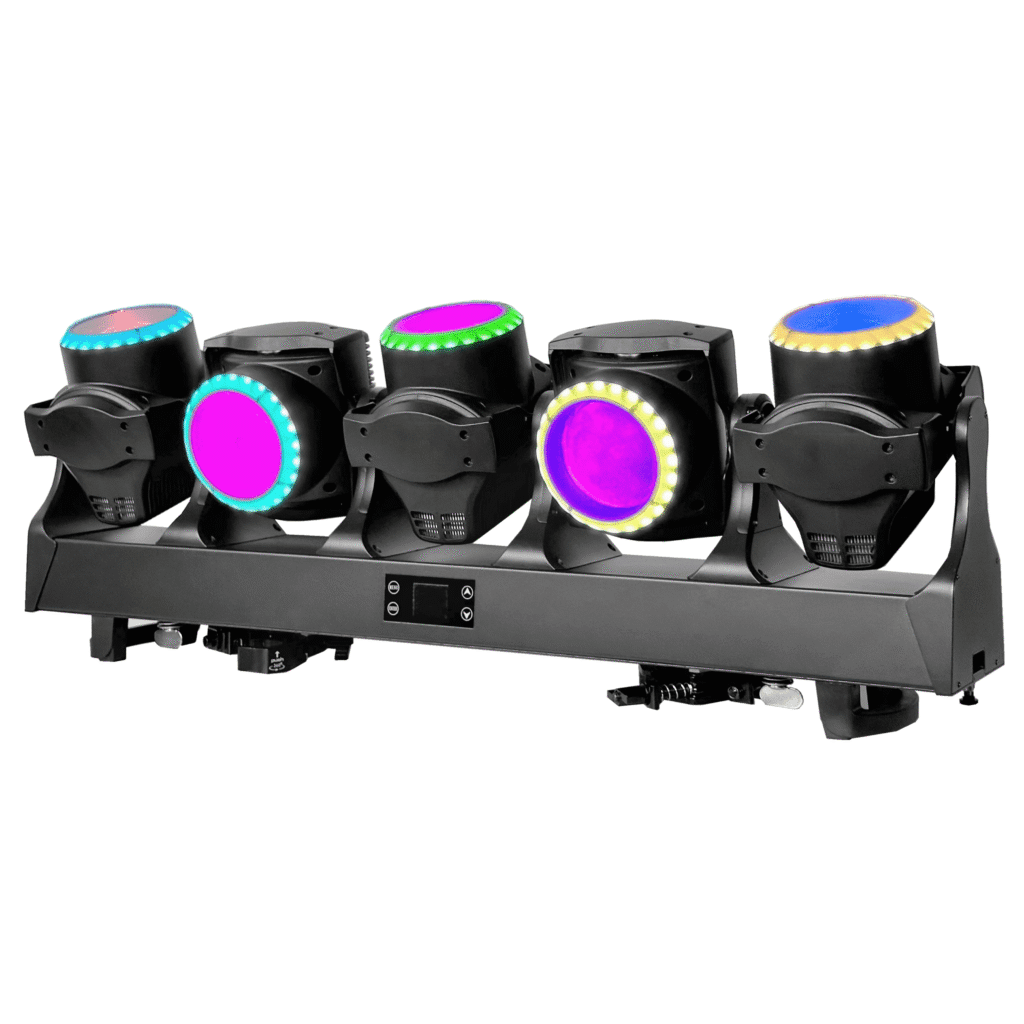
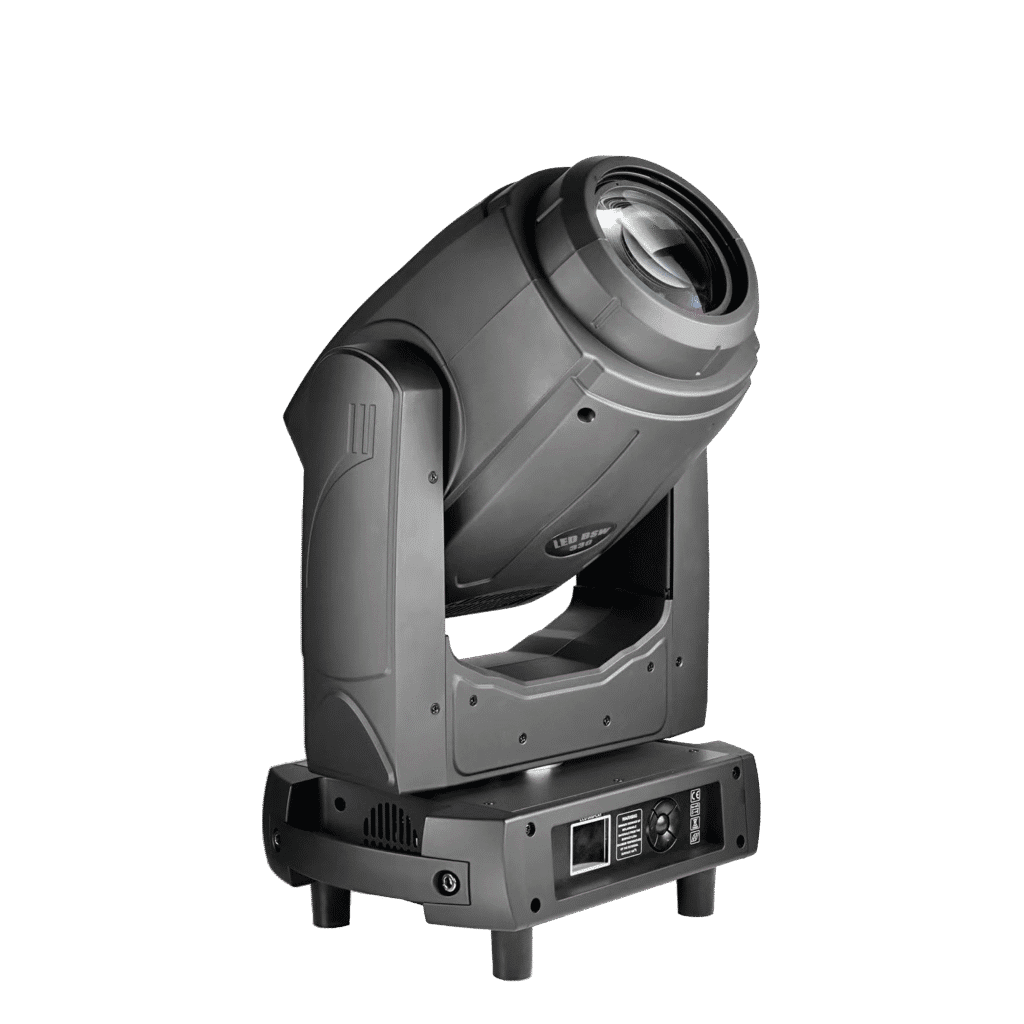
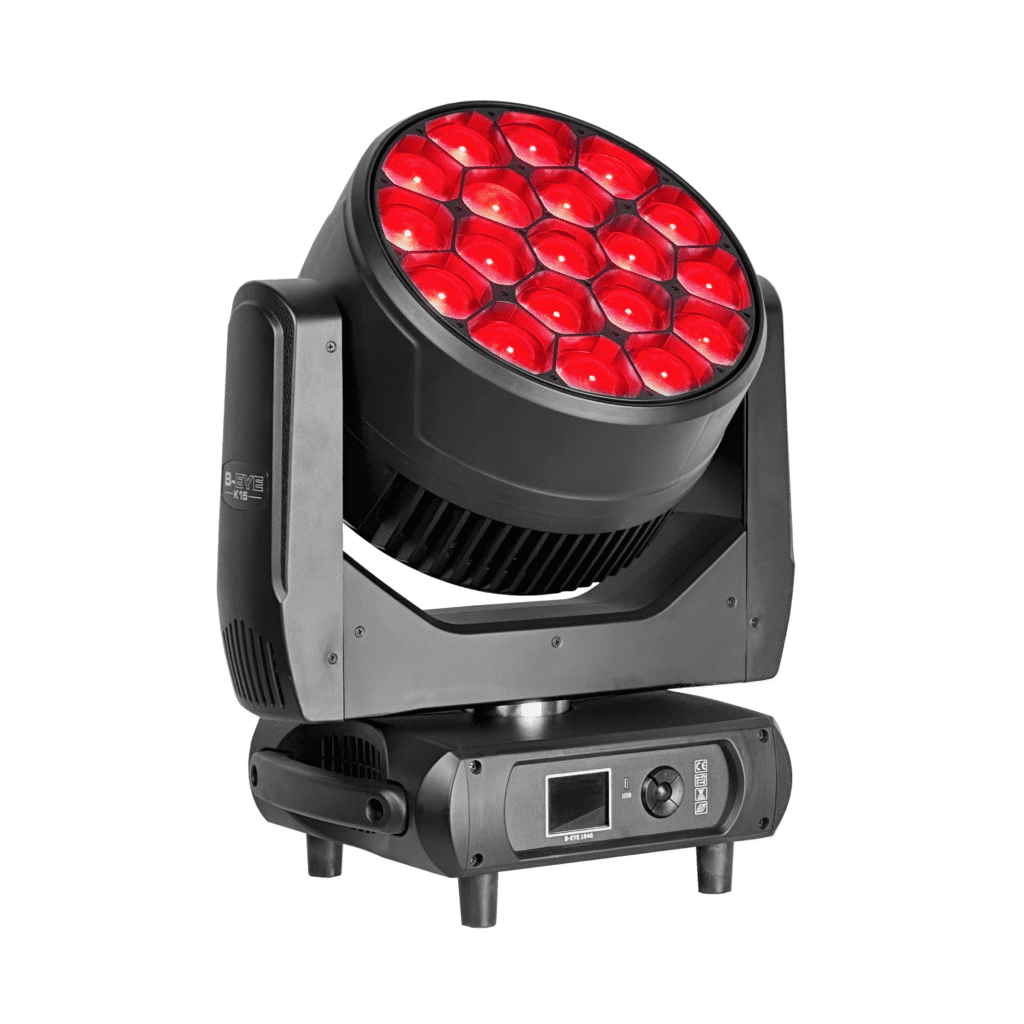
PC (High-Temperature Resistant Plastic): A Cost-Effective Solution for Indoor Fixtures
PC material is commonly used in entry-level and mid-range stage lighting fixtures, especially for indoor applications.
Representative Products:
- Tornado TB5
https://www.instagram.com/lirolighting/reel/DN6FaLWiSQN/ - NLED BSW 330 CMY+CTO
https://www.instagram.com/lirolighting/reel/DXMJsabkwgK/ - B-EYE K15 1940 PRO
https://www.instagram.com/lirolighting/reel/DSjAAtbE2vo/
Advantages:
- Significantly reduces overall fixture weight
- Lower production cost
- Flexible and adaptable design possibilities
Disadvantages:
- Lower heat dissipation compared to metal
- Reduced structural strength
- Not suitable for high-power or outdoor environments without metal reinforcement
Best Applications:
- Indoor stage lighting
- Budget-sensitive projects
- Light-duty entertainment venues
Stage Lighting Material Comparison Overview
| Material | Positioning | Key Advantage | Suitable For |
|---|---|---|---|
| Magnesium Alloy | High-end | Ultra-light & strong | Touring & premium IP fixtures |
| Die-Cast Aluminum | Mainstream | Strong cooling & durability | Outdoor & high-power fixtures |
| PC Plastic | Entry/Mid-range | Cost-effective & lightweight | Indoor lighting systems |
How LIRO-LITE Applies These Materials in Real Products
Based on real-world product design from LIRO-LITE:
- Outdoor / IP-rated fixtures → mainly magnesium alloy or die-cast aluminum
- Indoor stage lights → aluminum + PC hybrid structures
The reason is simple:
- Outdoor environments require waterproofing, corrosion resistance, and strong heat dissipation
- Indoor applications prioritize cost efficiency and lightweight design
Conclusion: Material Choice Directly Impacts Lighting Performance
In stage lighting design, material selection is not just a manufacturing detail—it directly determines:
- Fixture lifespan
- Thermal stability
- Safety performance
- Real-world usability
If you only focus on specifications like wattage or brightness and ignore materials, you may end up choosing fixtures that overheat, degrade quickly, or fail in demanding environments.
A truly professional lighting solution always balances:
Performance + Material + Application Scenario
Need Help Choosing the Right Stage Lighting Fixtures?
If you are not sure which stage lighting products are suitable for your project, our team at LIRO-LITE can help you select the right solution based on your application requirements.
We specialize in:
- IP-rated outdoor stage lighting
- Moving head lights
- LED effect lighting systems
 Portuguese
  English
  Russian
  Japanese
  Spanish
  French
  Dutch
Dutch  German